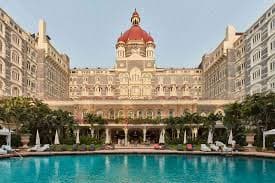
The Taj Mahal Palace
Colaba's 121-year masterpiece — the hotel that defined Indian luxury hospitality
Jamsetji Nusserwanji Tata
Founder · Est. 1903 · Colaba, Apollo Bunder, Mumbai
The Taj Mahal Palace Hotel was opened in 1903 by Jamsetji Nusserwanji Tata on the waterfront at Apollo Bunder, Colaba — a location chosen to face the Gateway of India and the Arabian Sea. The legend, possibly apocryphal, is that Tata built the hotel after being denied entry to one of Bombay's European-only establishments. Whether or not the origin story is literally true, the hotel that resulted was India's first luxury hotel built by an Indian, for Indians — a statement of national capability in the imperial era.
Over 121 years, the Taj Mahal Palace has hosted kings, presidents, artists, and the defining moments of Mumbai's public life. The hotel survived the 26/11 terrorist attacks in 2008, reopening its damaged sections with a restoration that became a symbol of Mumbai's resilience. The heritage wing — the original 1903 building with its Moorish-Renaissance architecture, central dome, and sea-facing rooms — remains one of the most architecturally significant hotel structures in Asia.
The hotel operates multiple restaurants that are individually significant: Wasabi (Japanese), Masala Kraft (contemporary Indian), Golden Dragon (Chinese), and the Sea Lounge (all-day with harbour views). Each would be a notable restaurant independently; together they constitute one of India's most important hotel dining programmes.
“Jamsetji Tata built this hotel to prove that Indians could create luxury that matched the world. One hundred and twenty-one years later, the proof stands.”
What Defines The Taj Mahal Palace
The Experience
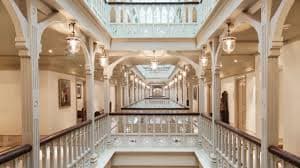
The approach from Apollo Bunder — the Gateway of India framing the hotel's facade — is one of the most significant architectural sequences in India. The lobby is marble, chandeliers, and the quiet confidence of a hotel that has been receiving guests for 121 years. The service operates at a level that is the benchmark for Indian luxury hospitality.
Rated & Reviewed By
Condé Nast Traveller Gold List · Forbes Travel Guide · Travel + Leisure · TripAdvisor Travellers' Choice
Editorial Notes
- The Taj Mahal Palace is India's most historically significant luxury hotel — studying it is mandatory for anyone in Indian hospitality.
- The 26/11 restoration is a documented case study in heritage building recovery.
- The hotel's multiple restaurants each deserve individual study — the dining programme is a portfolio, not a single offering.
- Mandatory curriculum reference for hospitality students across all disciplines.
Getting There
Nearest railway station: CST (taxi, 15 minutes). By road: Apollo Bunder, Colaba. The hotel faces the Gateway of India.