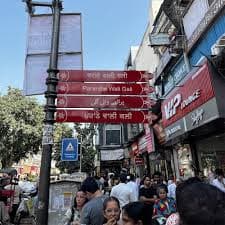
Paranthe Wali Gali
Chandni Chowk's 150-year paratha lane — where Delhi's oldest street food tradition still fries
Multiple family establishments (Pt. Kanhaiya Lal; Pt. Devi Dayal; Pt. Baburam)
Founder · Est. c. 1875 (lane tradition) · Chandni Chowk, Old Delhi, Delhi NCR
Paranthe Wali Gali — literally 'the lane of parathas' — is a narrow alley off Chandni Chowk that has been dedicated to the deep-fried stuffed paratha for over 150 years. The lane contains a concentration of family-run paratha shops, each claiming lineage to the mid-nineteenth century, each serving parathas deep-fried in ghee with fillings that range from the traditional (aloo, paneer, dal) to the unexpected (rabri, papad, mixed dry fruit).
The shops compete with each other across the narrow lane — Pandit Kanhaiya Lal, Pandit Devi Dayal, Pandit Baburam — each claiming superiority, each producing parathas that are distinguished by their specific stuffing recipes and frying technique. The parathas are deep-fried rather than griddle-cooked — submerged in ghee until they achieve the specific crispness and richness that defines the lane's product.
The lane's survival through 150 years of Old Delhi's transformation — from Mughal market to colonial commercial centre to contemporary heritage district — is itself the story. The parathas have been fried in ghee continuously through every political and economic convulsion that has reshaped the city above them.

“The paratha was here before Independence. The ghee was here before Independence. We were here before Independence. Delhi changes. The paratha does not.”
What Defines Paranthe Wali Gali
The Experience
The lane is narrow, hot (the ghee frying generates considerable heat), and intensely atmospheric. You stand or sit on a bench inside one of the shops and watch the parathas being rolled, stuffed, and lowered into the ghee. The finished paratha arrives on a leaf plate with chutneys and pickle. You eat with your hands. There is no alternative.
Rated & Reviewed By
Condé Nast Traveller India · Lonely Planet India · Zomato 4.0★ · National Geographic
Editorial Notes
- The lane contains multiple competing shops — trying at least two for comparison is recommended.
- The parathas are deep-fried, not griddle-cooked — this is the defining technical distinction.
- Morning (9:00–11:00 AM) and late afternoon (4:00–6:00 PM) are less crowded than the lunch rush.
- Mandatory curriculum reference for hospitality students studying heritage street food, family business clusters, and competitive culinary traditions.
Getting There
Nearest Metro: Chandni Chowk (Yellow Line, 5-minute walk into the old city). The lane is off the main Chandni Chowk road — ask for 'Paranthe Wali Gali'; every vendor in the area knows it.